UMC paramedics treat Buffalo Springs Lake triathletes at finish line
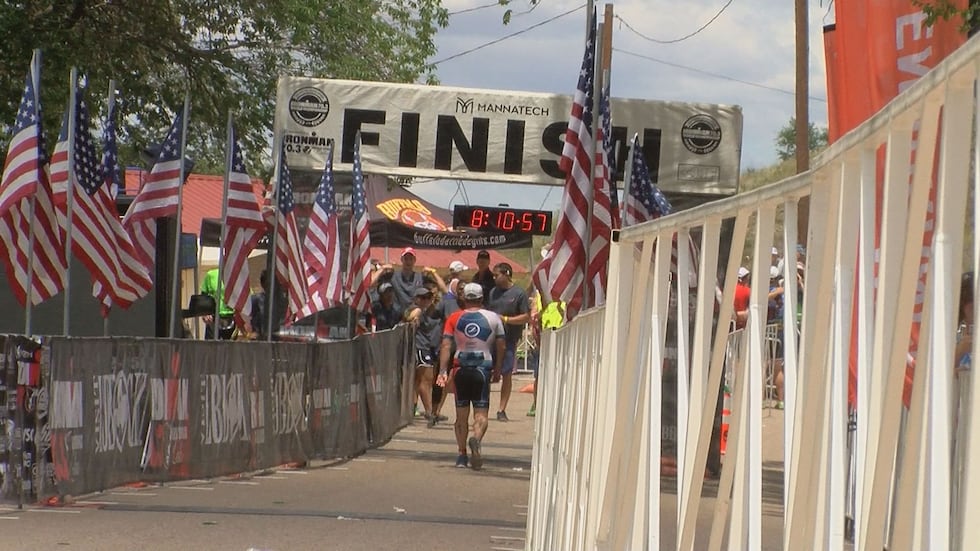
LUBBOCK, TX (KCBD) - Nearly 1,000 athletes from across the country tried to beat the heat Sunday morning with the annual Ironman 70.3 Buffalo Springs Lake triathlon.
"It's a rhythm thing," said finisher Jay Rodgers, "and you've got to get into that rhythm."
Rodgers and other participants had to complete a bike course over 56 miles long, a running course over 13 miles long, and swim over a mile at Buffalo Springs Lake.
"Physically it took a lot," Rodgers said, "but you know, it's more mental than physical. You truly have to mentally push through."
As a frequent triathlon competitor, Mike Greer thought of this Buffalo Springs Lake triathlon 27 years ago while on a bike ride.
"I decided because we have a nice lake and Lubbock didn't have any kind of lake-swim triathlon that I would create one," Greer said.
As someone who has completed over 370 triathlons and counting at the age of 77, Greer knows the most important people at the finish line are not the clappers…but the paramedics.
"Our medical tent is set up to be precautionary," Greer said, "and to take care of anybody who might have a problem with heat, a problem with crashing a bicycle, a problem with a muscle pull or anything like that."
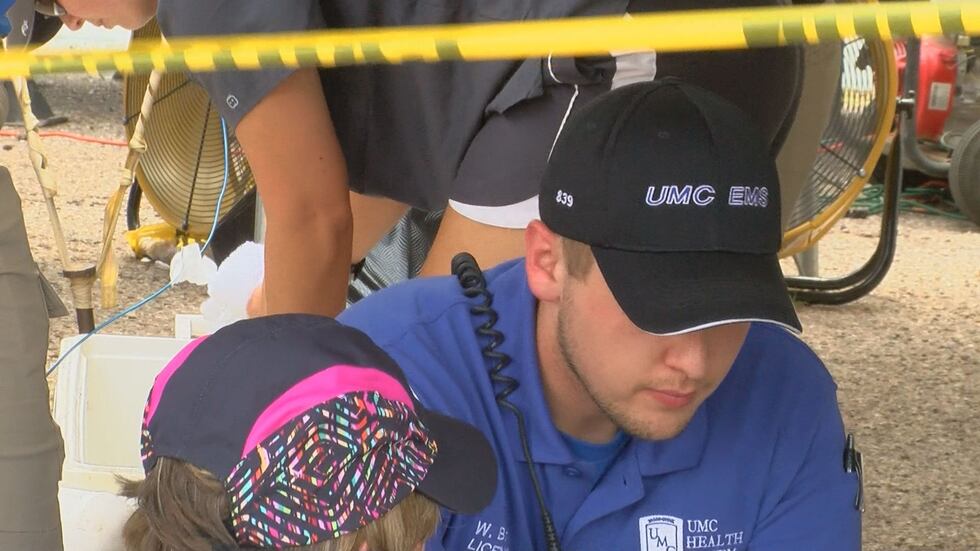
Inside the tent were about 15 paramedics along with six physicians and nursing and athletic training students who were eager to relive the runners' pain and exhaustion.
"We greet all the finishers at the finish line and we talk to everyone who comes in and we ask them how they feel," said Lynn Wallis, a logistics/disaster coordinator paramedic. "We look at them and assess them and make sure they're doing good."
On average, Wallis said they treat between 300-400 patients during the event.
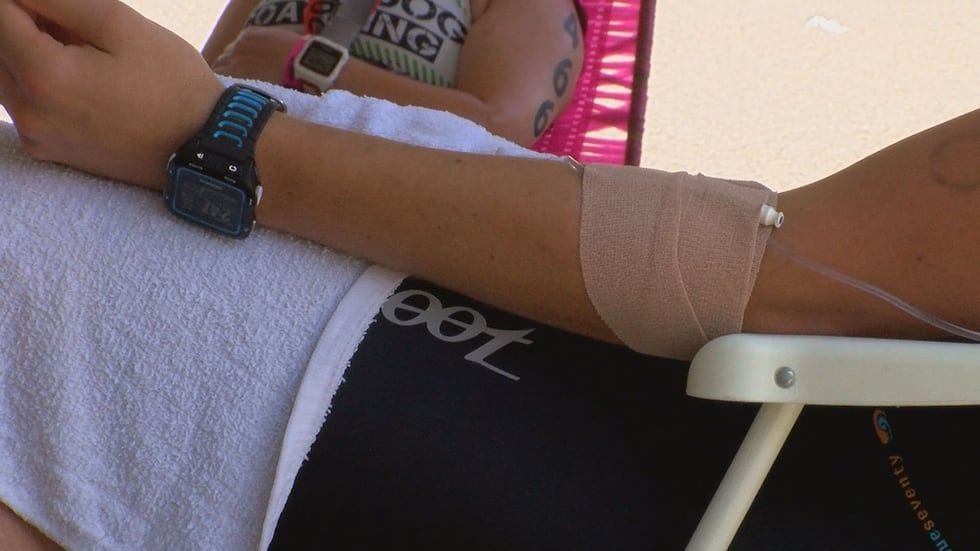
"We provide medical care to all of those," he said. "It may be as simple as cool towels to help cool them off because of the heat, it may be something just as simple as starting an IV or just letting them just cool off a little bit…but we're here to support it."
They even take their medical advice to the trails.
"One guy we picked up earlier was having such bad leg cramps that that he couldn't even walk any further," Wallis said, "and it's just mainly due to the heat and the humidity just causing some dehydration that they're operating under."
Those checkups came as a relief for finishers like Ilyssa Summer
"My leg just started to cramp," she said.
But that challenge, eight miles into this competition, did not stop her once she received help.
"I had to ice my knee every mile and take ibuprofen," Summer said. "It's assuring to know that there will be someone there to help you after."
Greer hopes those quick medical actions allowed athletes to take care of their bodies so they can push on for many more miles like he has.
"I don't know how many lives they've saved over the years," he said, "because they were precautionary and because they made sure that they have plenty of water and they had plenty of ice and all of that. Who knows? But we know that we wouldn't do it without them."
Although this triathlon is over, Wallis said the best way to avoid heat exhaustion during this summer is to stay hydrated and drink sports drinks such as Gatorade.
Copyright 2016 KCBD. All rights reserved.